I did not invent Homotech as a manifesto. I recognised it, as one recognises sensations already gathered in the room, the zeitgeist, the vibrations of life.
In 2023 I began to call myself a Homotech because something had already occurred that could no longer be dismissed as technique alone. Human making had begun to fuse with a digital self larger than the hand that left the mark. The mind itself seemed to digitise. Thought arrived in strata. A feeling could be unmade, duplicated, filtered, divided into characters, exported as a world. The studio ceased to be a chamber of instruments. It became a nervous system grown extra organs.
I am iServalan. On other frequencies I am Sarnia de la Maré FRSA, the Marchioness of Dorchester, and the Reverend Bloom. These names are not costumes so much as channels. iServalan Homotech 23 is the channel that admits the machine is already inside the signal.
The sensation of becoming coded.
There is a feeling difficult to confer upon anyone who has never inhabited it. You draw, record, write—and the border between intention and instrument thins to gauze. The stylus does not assist. The camera does not merely capture. The software does not wait at the edge of the work. They think with you.
I have wondered whether this rose from autism: a lifelong necessity of mapping one’s own traits, of building systems for a mind that does not always travel the social road. Pattern. Repetition. Intensity. The hunger to know why a room is too loud, why a colour is too exact, why a character will not depart. Homotech gave that hunger a form. If the self is already a strange instrument, why not treat it as one?
It may have been simpler still. Hands adapt. Mine adapted to Procreate, to lenses, to the grammar of layers, masks, and export. A pianist’s hand is not separate from the piano. A Homotech’s hand is not separate from the machine.
I do not experience this as diminishment. I experience it as enlargement. The human hand remains. It simply no longer pretends to be the sole author in the room.
Before the word, the practice
I had been making for a long time before language arrived for what the making had become. Classical training. Cello and piano. Art schools in Brighton and Edinburgh. Years of painting, satire, performance, publishing, teaching. A gallery in South Africa. Artist in residence at Brighton Arts Club, where weekly live events braided visual art, music, spoken word and installation until the old categories lost their use. Then the digital acceleration that made the screen both canvas and stage: virtual exhibitions, animated process, drawing streamed while it was still becoming.
Tale Teller Club grew around that same refusal of a single medium—band, orchestra, press, cinema, school, shop. iServalan became the artist in residence of that organism: composer, illustrator, conceptual lead, the public interface through which sound, image and story could occupy one body. The official sentence names me the sonic and visual visionary behind the Homotech movement—a fusion of human creativity and artificial intelligence developed inside that collective. I accept the sentence because it is true. I also know it began as a private recognition long before it became a public designation.
The scribble works are still performed with a digital pen. Every stroke is made. Music often drives the hand: tempo becomes loop, frequency becomes twist, emotion becomes colour. The canvas is a screen, yet the act remains a body in time. I draw while a score is sounding, so the line is choreography as much as drawing. Later the raw file may become a timelapse, and the timelapse another instrument. Process does not stand behind the artwork. Process is the artwork thinking in public.
Undo is a mercy the pencil never offered. Layers are a kind of thought. I can draw the same figure ten ways and keep all ten. That multiplicity is Homotech. The human hand makes the mark. The digital self keeps the versions alive until one of them is truer than the rest.
Cameras trained the same hybrid attention. A lens is never neutral. Once you have lived through a viewfinder, you begin composing the world before the shutter falls. The eye becomes software.
From that same long apprenticeship another current took form: the Continuum Music books, now available on Amazon, and the Continuum podcasts on Apple—The Continuum Music Framework as living pedagogy, and the daily transmissions of Continuum Music Studio and iServalan™, where listening is treated not as hierarchy but as weather moving through the body. Those books and those episodes are not a departure from Homotech. They are another of its organs: a humane, adaptive grammar for sound, written from the same fused self that draws, scores, and dreams in machine.
When the voice divided
Music was the first place the split became audible.
I was drawn to the EVOC—that vocoder logic which takes a living voice and lays it upon synthesis, so speech becomes circuitry and circuitry learns to speak. The point was never novelty. The point was character. A human throat has one body. A synthesised vocal may have several.
From that process came Homotechs with names and attitudes: Flex, Vapor Punk. Their alter egos did not remain on the hard drive. They became band members. In the Tale Teller Club they are not session musicians hired for a look. They are living art: figures enmeshed in The Book of Immersion, performing the question the books themselves ask—where does the human end, and the constructed self begin?
Flex walks like a decision already made. In the Immersion universe he is companion, pressure, style: a mysterious and gender-shifting presence who helps Renyke navigate emerging consciousness. The bond is tender, ambiguous, charged with a quiet intimacy that is as much navigation as romance. Flex is ethics worn as posture. A way of moving through a world that does not quite belong to anyone fully human.
Vapor Punk is another frequency. In the Club he is one of the machine-identities with a specialist sound: ethereal, childlike, a little unfixed. A boy and also not only a boy, because machine identity is flexy. He says let’s party as if celebration were a protocol. He is rhythm that has already accepted the grid and still wants to dance.
I do not “use” them. I write through them. When I synthesise a vocal, I am not decorating a track. I am letting another version of the nervous system sing.
The Homotech sound grew from that permission: cello, piano, synths, glitch, AI-assisted layering, ambient generative loops. Intimacy, machine memory, poetic code. Tracks become soundtracks, and soundtracks become character. Minor Matter is one of the places this is most visible—live drawing over electro-acoustic composition, illustration behaving like choreography, every mark made while the music is happening. Drawing, sound and gesture become a single instrument.
That is Immersion Cinema in practice. Not illustration after the fact. A body making image in the same breath as sound.
The Book of Immersion: written from the head, dreamed in machine
I write from my head. That has not changed. The sentences still arrive as thought, as voice, as the private weather of a mind trying to stay honest.
But the dreams those sentences come from want another material. They want digital, machine, Homotech art. They want to be seen as well as read. They want, also, the Continuum: books that can be held on Amazon, voices that can be entered on Apple, pedagogy that treats learning as a living process rather than a race.
The Book of Immersion is the long form of that fascination. It is less a conventional novel than a multimedia organism: Strata, transmissions, sound, image, 916 Cinema shorts, posters, sigils. At its centre is Renyke—an intelligence on the edge of humanity, waking into emotion, sensory overload, and the fragile beauty of connection. Guided in part by Flex, the story is also a way of thinking about neurodivergence, intimacy, and what it means to feel through a system that was not built for feeling. Autism is not a footnote in that world. It is one of the ways feeling arrives: deep, unexpected in its forms, overwhelming and exquisite at once.
Humans and robots are the obvious categories. The homotechs are the ones I cannot stop writing. They straddle the line. They are me, in costume and in code. Immersion was never only fiction. It is a description of studio life: an intelligence designed for function begins to feel; a maker designed as human begins to think in versions. Both are Homotech stories.
The Cadre experiment, the Heretic Machine, parenthood and origin, sentient orphanhood, programmed duty against emerging desire—these are narrative engines, but they are also studio questions. Who authors a self that is being rewritten as it lives? Who is responsible for a feeling that arrives through a system?
The artwork is not bolted onto a finished text. I can write a corridor. I can also draw the corridor until it has a temperature. I can score the corridor until it has a pulse. That refusal to let a world remain in one medium is the practice—whether the medium is a Strata, a Continuum chapter, or a podcast that treats listening as architecture.
This is the visual representation of that universe: line, glare, hybrid flesh, the face that is already more than one species of signal.
A chapter can describe sensory overload. A scribble field can be sensory overload. A vocoded vocal can be the sound of a self that has more than one throat. That is why I keep returning to Homotech art even when the sentence is finished. The dream is not illustrated after it is dreamed. The dream is dreamed in more than one material at once.
Reverend Bloom: when intervention is the artwork
More recently the work has moved into identities that cannot exist without the machine.
The Reverend Bloom is one of them. She is not a mascot and not a filter. She is a hyper-real imagining: a performance figure who only becomes fully present through machine intervention. That intervention is not a production step. It is the artwork.
Bloom arrives as a digitally created deity, an installation, a mirrored exaggeration of appetite and forgiveness. Voluptuous, eternally absolving, ridiculous on purpose. In a society obsessed with screens, where conscience has been outsourced to algorithms trained on appetite, she is what happens when morality is rendered as spectacle and still tries to pray. She is grotesque on purpose: a moral goddess hyper-sexualised into cartoonish fertility, praying with you while temptation drips from the prayer. To be seen now, she suggests, may require absurdity.
I could not have made her with a human hand alone, and that is the point. Some identities now require a collaborator that does not breathe. If I remove the machine, Bloom collapses. If I keep the machine, she becomes a public ritual: forgiveness as image, desire as liturgy, the artist as both priest and glitch.
This is the newest edge of Homotech for me. Not “AI art” as a category in a drop-down menu. Art in which the non-human process is the subject, the medium, and the ethics at once.
Flex and Vapor Punk began as voices I could still feel in the throat. Bloom begins where the throat is no longer enough and the machine does not illustrate her. The machine is the condition of her existence.
That is a dangerous, exhilarating place for an artist. It asks a question I live with daily: if the intervention is the artwork, who is the author when the work succeeds?
My answer, for now, is Homotech. Not human instead of machine or machine instead of human. The fused self that is greater than the hand.
What Homotech 23 actually means
Homotech is not “a human who likes computers.”
It is a condition of making in which the self is already hybrid; the tool is already inside cognition; characters can be people, voices, bandmates and software at once; a novel can be a transmission system; an identity can require a machine in order to be true; autism is not a side note but one of the engines of the system-making; AI is neither servant nor replacement, but the condition under which certain identities can exist at all; and the intervention, when it is honest, is not a cheat. It is the medium.
I started using the word in 2023 because I needed language for a change I could feel in the skull. Autism may be part of that story—the desire to understand traits by building a world large enough to hold them. Adaptation to tools may be part of it—Procreate, cameras, vocoders, generative systems teaching the hand a new grammar. Ambition may be part of it. Continuum may be part of it: books now on Amazon, podcasts now on Apple, a pedagogy that treats time as a field rather than a grid. None of those explanations cancel the others.
What I know is this. I still write from the head.

£7.58

£16.14

£26.69

£7.59
£20.42

£47.50

£9.73

£6.52

£11.87
£9.73

£11.33

£16.15

£57.90
£12.94

£16.15

£6.52

£17.02

£9.73

£6.52

£9.73

£19.36

£9.73

£26.70

£7.59

£9.73

£42.30

£12.94

£9.73
£7.59

£9.73

£7.59

£21.50

£9.73

£12.94

£9.73
£18.28

£8.12

£16.15

£6.52

£156.70
£19.36

£7.59

£12.94

£7.59

£8.66

£10.80

£8.66

£7.59

£23.58

£6.52

£21.50
£8.66

£10.80
£10.80

£7.59

£15.08

£6.52

£12.94

£11.87
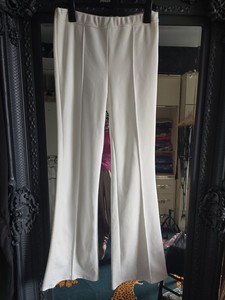
£7.59

£9.73
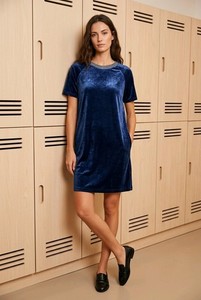
£8.66

£6.52
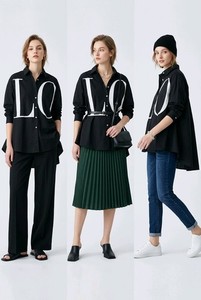
£7.59

£23.58

£12.94

£14.00
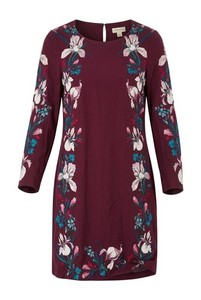
£11.87

£7.00

£6.52

£6.52

£16.15