Mar 6, 2026

Jesse Jackson: The Campaigns That Changed American Politics #infopod #politicauk #civilrightsmovement

Today we’re stepping back from current conflicts to look at a figure who reshaped American politics in a different way: Jesse Jackson.

Jackson first became nationally known as a civil rights activist working alongside Martin Luther King Jr. during the civil rights movement of the 1960s.

But it was his presidential campaigns in the 1980s that truly changed the political landscape.

In 1984 and again in 1988, Jackson ran for the Democratic presidential nomination. At the time, the idea that a Black candidate could mount a serious national campaign was still widely doubted.

Jackson proved otherwise.

In 1988 he won millions of votes, carried several state primaries, and finished second in the Democratic race. His campaign mobilised huge numbers of new voters, particularly among African American communities, young people, and working-class Americans.

Central to his political strategy was the idea of the Rainbow Coalition — a broad alliance bringing together minorities, labour unions, farmers, peace activists, and poor communities.

The message was simple but powerful: many different groups shared common economic struggles and could gain influence by acting together politically.

This approach helped reshape the Democratic Party, pushing issues such as economic inequality, voting rights, and international human rights into the centre of national debate.

Although Jackson never became president, his campaigns opened the door for future candidates from more diverse backgrounds.

Many historians see his work as helping pave the way for the election of Barack Obama two decades later.

Jackson’s legacy shows that sometimes the most important political victories are not the elections themselves, but the way they change who participates in democracy.

That’s the situation for now.
You’re up to date — and we’ll watch what changes next.


Military casualties and financial impact on Israel and US One Week Into the War #infopod #war #deaths #financial

Good evening.
You’re listening to the War Update InfoPod, developments so far.

As the conflict approaches the end of its first week, one question people are asking is simple: what has the war cost so far?

Let’s look at two measures — military casualties and financial impact.

In terms of military losses, the numbers remain relatively low compared with many major wars. For the United States, around six service members have reportedly been killed so far, with several others injured in attacks on American facilities in the region.

Most of the fighting has been conducted through air strikes, naval operations, missiles, and drones, which reduces direct ground combat and therefore limits military casualties.

For Israel, the situation has been somewhat different. The majority of deaths inside Israel have been civilian casualties from missile and drone attacks launched in retaliation.

Several Israelis have been killed and many more injured during missile strikes and emergency responses. Military casualties have remained relatively limited because most operations are taking place through long-range attacks rather than large ground battles.

But if the human cost has so far been limited compared with many wars, the financial cost has been enormous.

The United States is estimated to have spent several billion dollars in the opening days alone. Missile launches, aircraft sorties, naval deployments, and interceptor systems all carry extremely high operating costs.

Many of the defensive missiles used in modern air defence systems cost millions of dollars each.

Meanwhile Israel is also absorbing major financial pressure. Continuous use of air-defence systems, military mobilisation, economic disruption, and damage to infrastructure are costing the country billions of dollars per week.

So the first week of this war reveals something about the nature of modern conflict.

Today’s wars can be less deadly for soldiers in the early stages, because much of the fighting happens at long range.

But they are also extraordinarily expensive, with advanced weapons systems and missile defences costing huge amounts of money in very short periods of time.

The longer a conflict like this continues, the more those costs accumulate — financially, economically, and politically.

That’s the situation for now.
You’re up to date — and we’ll watch what changes next.
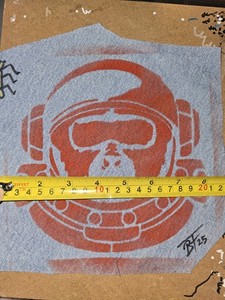
 

Toddle Poddle and the Wobbly Whale

 Toddle Poddle and the Wobbly Whale

Toddle Poddle went down to the bay
On a windy and wibbly Wednesday.
He packed a jam sandwich,
A hat with a bell,
And a bucket of biscuits as well.

Suddenly—

WOBBLE!

A whale popped up out of the blue
And wiggled and wobbled like jelly in stew.

“Good morning!” said Whale
With a watery wail.
“I’m practicing dancing today!”

The whale did a wobble,
A splosh and a spin—
And splashed poor Poddle right into the bin.

Toddle Poddle just laughed,
Shook all seaweed away—

“Best dance lesson ever, 

That's what I say!”